
Hot Take: I love community dinner
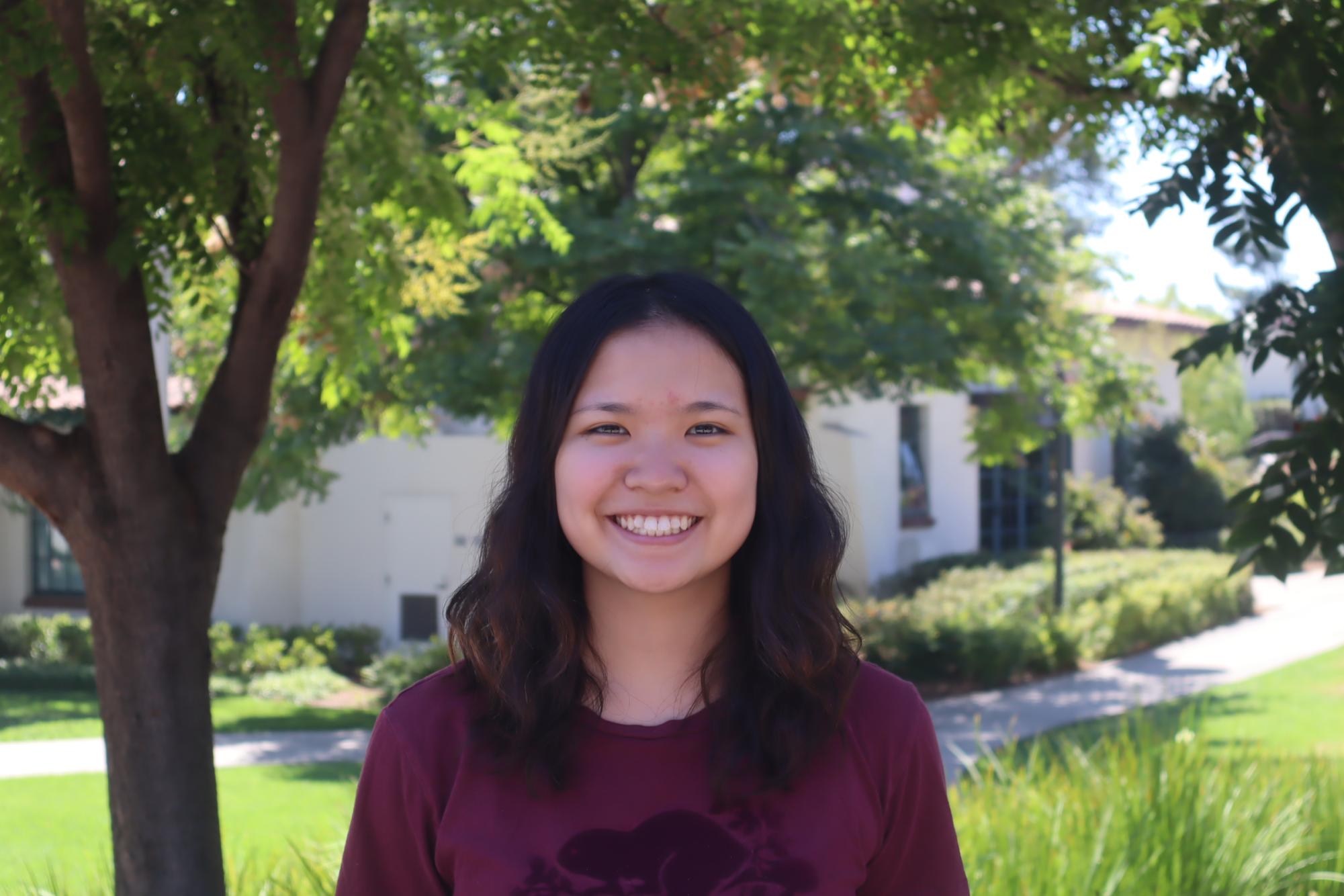
As you don your formal uniform and scramble to the Price Dining Hall, you might think that community dinner, a longstanding tradition at Webb, is an obstacle in the busy life of a Webb student. However, day-student and dedicated-community-dinner-attendee Hanbo Xu (‘25) sees it as an opportunity to meet new people.
“I met a lot of new people that I otherwise wouldn’t have had the chance to talk to through community dinner,” Hanbo said. “I understand that it is an extra commitment, but it is only 45 minutes, and you have to get food anyways.”
Hanbo states that he has regularly overheard students, especially boarders, expressing frustration for the extra commitment. However, he believes community dinner is an opportunity to step outside of one’s usual friendship bubble, as he has been able to meet new teachers and students in other grade levels.
“At Webb, it’s easy to get stuck in the same group of friends,” Hanbo said. “We forget about how many people are out there in the Webb community that have diverse experiences and backgrounds. Community dinner is a low- stakes way to step out of that.”
Ultimately, Hanbo believes community dinner is an integral part of creating community outside usual circles and that students should embrace the opportunity to socialize rather than complain about it.
Hot Take: Sushi day is overrated
Many may agree that sushi day at Webb is an exciting break from the usual dining hall food. However, for Jason Chang (‘27), this event tends to be more of a hassle than a treat.
“I think sushi day is overrated,” said Jason. “The lines are absurdly long, the sushi is not much better than the usual dining hall food, in my opinion, and by the time you finally get your plate, there are hardly any seats left.”
While many students rush to the dining hall for a taste of this highly anticipated day, Jason thinks that the appeal of sushi day is more about novelty and rarity than the actual experience.
“I think people are more drawn to the idea of sushi day than to the reality of it,” Jason said. “Since we only have sushi day a couple of times a year, it creates a sense of excitement and anticipation. But considering the long wait, sushi day is not worth the hype.”
For Jason, a simpler, less crowded meal is far preferable to the chaos of sushi day.
“I would much rather just grab something quick and enjoy my lunch with my friends without all the hassle,” Jason said.
Hot Take: VWS and WSC classes should stay separate
With the recent transition from a binary school system to a singular school, many students have embraced the idea of a more unified campus. However, Kaia Yee (‘28) believes that combining classes between VWS and WSC is a step in the wrong direction.
“Having separate VWS and WSC classes gave us space to build our communities,” Kaia said. “I feel like it’s much easier to participate in class and give my genuine opinion on vulnerable topics without the constant pressure of mixed-gender dynamics.”
Kaia argues that separation isn’t about division, but more about cultivating distinct identities and fostering growth.
“Especially as a freshman, it’s hard to talk about certain topics because the maturity levels among different genders vary,” Kaia said. “From what I’ve heard from many upperclassmen and teachers, VWS and WSC classes have very different vibes and approaches to discussions as well as unique traditions.”
Kaia also points out that, despite the separate classes, VWS and WSC students still had plenty of opportunities to interact with one another outside the class.
“We didn’t need to share every class to feel like a unified school,” Kaia said. “We got to spend time together during lunch, clubs, and events — there’s already so much interaction happening across the two schools outside of class.”
For Kaia, combining classes diminishes the strengths of both schools.
“By keeping VWS and WSC separate, we could embrace our differences while still being part of a larger community,” Kaia said. “Merging us doesn’t necessarily improve that — it just diminishes what made both schools special in the first place.”
Hot Take: Webbies need to stop complaining about work
Webb is academically rigorous, with many students managing a high workload. As a result, it is not uncommon for students to voice concerns about the overwhelming demands of their busy schedules. Sophie Lin (‘26) however, presents a bold take: complaining about work does not fix anything.
“I often hear people complaining about how they have too much work,” Sophie said. “It turns into this negative feedback loop where you feel like you must talk about having a lot of work. When you keep repeating it, you get more overwhelmed, and you do not end up doing it.”
Sophie explains that this issue extends beyond a student and their schoolwork. This tendency affects community culture and the collective mindset, creating an even more anxious and competitive environment.
“When you think about what kind of community you’re building by spreading this practice of complaining, I don’t think that’s the kind of community we want to build,” Sophie said. “Instead of talking about how much there is to do, we could focus on strategies for getting it done.”
Overall, Sophie believes that if a Webb student makes a commitment, they should follow through on it.